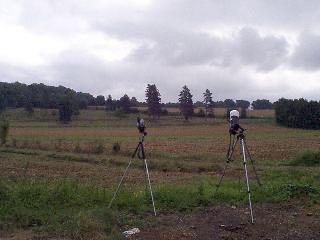
Here are some of the digital images I was able to obtain of the solar eclipse from Pierrepont, France during the recent total solar eclipse. We had originally planned to go to the Metz/Luxembourg region to view the eclipse and had booked accommodation there. However, the weather forecast and more importantly the Meteosat cloud images suggested that the best chance of success lay further to the West. It seems we were lucky to see the eclipse at all. Small changes in position made all the difference between being rained on, clouded out or seeing totality.
We set off at 0600 EST from Tervuren under dark overcast clouds with a light drizzle falling. Conditions worsened as we went South down the E411 and at one point we were in low cloud with heavy rain and poor visibility for driving. Fortunately we were early enough that traffic was not a problem and by 0900 EST we were well inside the belt of totality and stopped for a welcome coffee and croissant breakfast in a cafe at Langwy.
The weather conditions were very variable and we were playing a game of chase the gap in the clouds based on Meteosat pictures from earlier in the day. The final location was rural with a nice southern horizon and was my best guess at where a clear gap in the clouds should be at maximum eclipse. I was out by about 10 minutes.
I am afraid that they are mostly captures of video with a Sony Hi8 video camera at 10x and a few Kodak DC-120 shots using a 2x teleconverter. Apart from a few shots taken through extremely dense cloud and at totality all the images here were taken using Baader planetarium's excellent AstroSolar filter material.
The slides taken with a 4" Maksutov f10 are away for processing and sadly will not include any shots of totality. I decided to watch the brief period of visible totality with binoculars rather than try to photograph it.
We arrived at a suitable location to set up just outside the small village of Pierrepont in NE France. First contact was glimpsed between the clouds shortly after it occurred. And then thick low cloud rolled in again. Things did not look at all promising, but we decided to stay put and gamble on the clear patch arriving for totality.
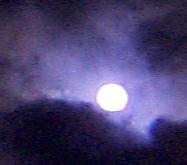
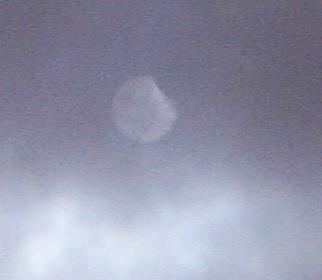
The cloud was so dense the sun was completely invisible during the early eclipse and I had to remove the safety filter to get any image at all. But gradually it began to thin out a bit revealing a sun with an increasingly larger bite taken out of it. The most difficult problem was that there were two layers of clouds moving in different directions - a high level of slow moving thin clouds and a faster moving dense lower layer which threatened rain several times.
It looked as if the whole show was likely to be something of a disaster with rain clouds coming past for most of the first half of the partial eclipse. They did look more atmospheric than a perfect clear sun though.
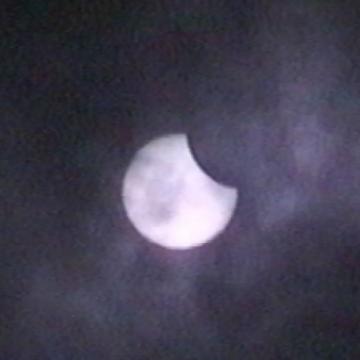
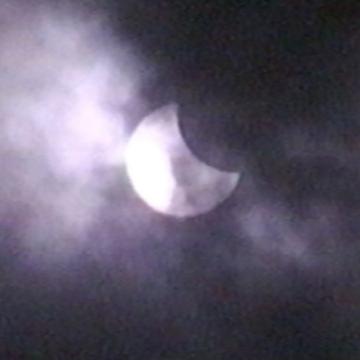
Then it became 5/8 cloud cover and sunny with deep blue sky overhead. Things were definitely looking up. The contrast to the earlier conditions was very marked. These nice conditions held for about half an hour.
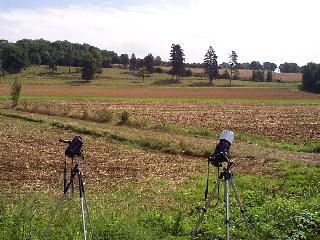
The clear blue sky had arrived just a few minutes too early.
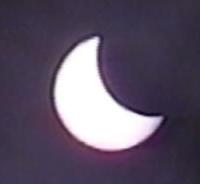
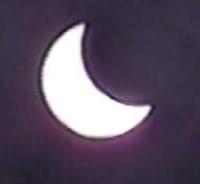
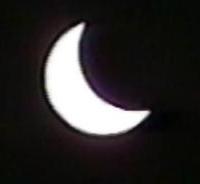
As the moon obscured more and more of the sun's disk the shadows of the vertical tripod legs became increasingly sharp and beyond 90% it started to feel much cooler.
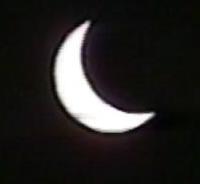

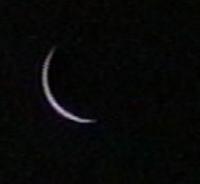
The very last sliver of sun was amazing. We could see large clouds raining to the West and I had several large polythene sheets to cover the gear in the event of a sudden rainstorm. About 2 minutes before totality fast moving low cloud came in suddenly from behind and it looked like we were clouded out.
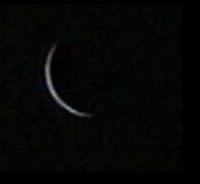
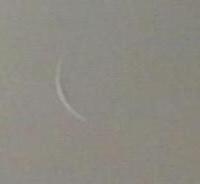
We entered totality with 8/8 cloud and it was surreal. Everything went very quiet and the birds were silent. The horizon was still bright and the clouds above us midnight blue with two distinct sudden shifts in darkness - presumably as the last remnants of the suns disk disappeared in the diamond ring. It looked like that was all we would see, but fortunately there were some gaps in the dense clouds.
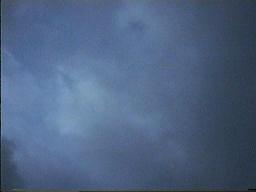
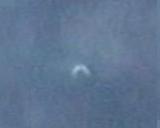
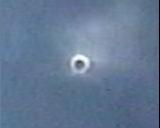
And the sun peeked through one of them for about 45 seconds during totality.
These are frames at different exposures to show prominences and corona. I had hoped to use the Mak for this, but I decided there was not enough time to get decent shots in a cloud break which might only be a few seconds long so I left the video running and watched the totality through my binoculars. The salmon pink prominences and chromosphere were absolutely stunning against the ghostly white corona. I had not thought about how colourful they would be.
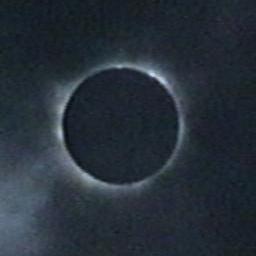
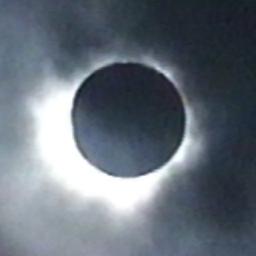
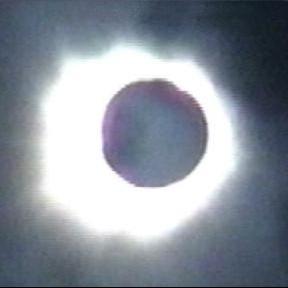
Then the clouds closed in again and prevented us from seeing 3rd contact. So we saw 45 seconds out of a theoretical maximum of 2 minutes 5 seconds totality, but missed out on the Bailys beads and diamond ring. It was distinctly cooler for several minutes and a light breeze made the chill more noticeable.
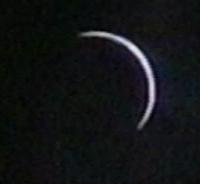


The sun resumed normal service a little more than an hour later...
Wildlife was somewhat confused by the whole event and we had a very confused bat flying around frantically in bright sunshine long after totality had ended. It proved rather difficult to photograph
Then it improved gradually throughout the afternoon until by 4pm we had 1/8 fluffy white clouds in an azure blue sky. We stayed overnight in Luxembourg and were told that they had been totally clouded out.

